






Design a Book Cover
Grades: 4-12
Design a Book Cover
Students create a new cover design for a book they are reading to demonstrate comprehension and explore character, plot, setting, symbolism, and conflict.
Engage
Share with your students that they will be creating new book cover to encourage other students to read. Then, as a class, look at the covers for several books you have read. Does the cover art reflect the content and mood of the book?
To help students prepare for their own book cover design, have them complete a character sketch or character web about the main character. This will help them develop details about the main character, so they communicate information about the character linguistically before trying to do so visually.
Use the book teaser activity to have students identify details in the story they can use to hook a potential reader. Not only can they then copy and paste the text onto the back cover, this activity get students to think about the message they want to convey to hook a new reader.
Create
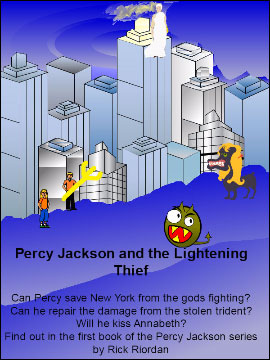
Assign the Book Cover template and ask your students to create new cover jackets for some of their favorite books to encourage other students to read. Remind them that a book jacket includes:
- A clear title and author name
- A graphic design that reflects the books' themes
- A summary, or teaser, of the plot without giving away the ending
- A review (opinion) of the book
Then, ask students to find potential images they can use in their cover design. Using the descriptive words in their character sketch and cover design worksheets, have them search the Image library to find images or illustrate their own using the paint tools.
Share
When the cover designs are completed, have students work in small teams to evaluate them. Collect all of the evaluations and then distribute them to the cover designers.
Print the new cover designs and display them around school to promote reading. The librarian may choose to display them in the library to help visiting students connect with literature that interests them.
Assessment
Create a rubric or checklist to help guide student work during research, writing, and final book cover design.
Use the character sketch to evaluate how well students understood the content of the book, as well as their skill at describing the characters and events in the text. Use their cover proposal to evaluate how well they can translate their content research into a design that shares this information visually.
Resources
Powers, Alan. (2003) Children’s Book Covers: Great Book Jacket and Cover Design. Mitchell Beazley. ISBN: 1840006935
Anchor Standards for English Language Arts
Reading Standards - Key Ideas and Details
1. Read closely to determine what the text says explicitly and to make logical inferences from it; cite specific textual evidence when writing or speaking to support conclusions drawn from the text.
2. Determine central ideas or themes of a text and analyze their development; summarize the key supporting details and ideas.
10. Read and comprehend complex literary and informational texts independently and proficiently.